SQL Commands.
Associated with: SQL Basics course
Discusses SQL Commands , The five basic SQL commands are SELECT, INSERT, UPDATE, DELETE, and CREATE. These commands allow users to retrieve, add, modify, remove, and define database structures, forming the foundation for database management operations.

SQL Basics
Associated with: SQL Basics course
SQL (Structured Query Language) is a standard programming language used to manage and manipulate relational databases. It allows users to store, retrieve, update, and delete data efficiently.Structured query language (SQL) is a popular query language that is frequently used in all types of applications. Data analysts and developers learn and use SQL because it integrates well with different programming languages. For example, they can embed SQL queries with the Java programming language to build high-performing data processing applications with major SQL database systems such as Oracle or MS SQL Server. SQL is also fairly easy to learn as it uses common English keywords in its statements. SQL statements, or SQL queries, are valid instructions that relational database management systems understand. Software developers build SQL statements by using different SQL language elements. SQL language elements are components such as identifiers, variables, and search conditions that form a correct SQL statement.What are SQL commands? Structured query language (SQL) commands are specific keywords or SQL statements that developers use to manipulate the data stored in a relational database. You can categorize SQL commands as follows.
Types Databases
Associated with: Data Base course
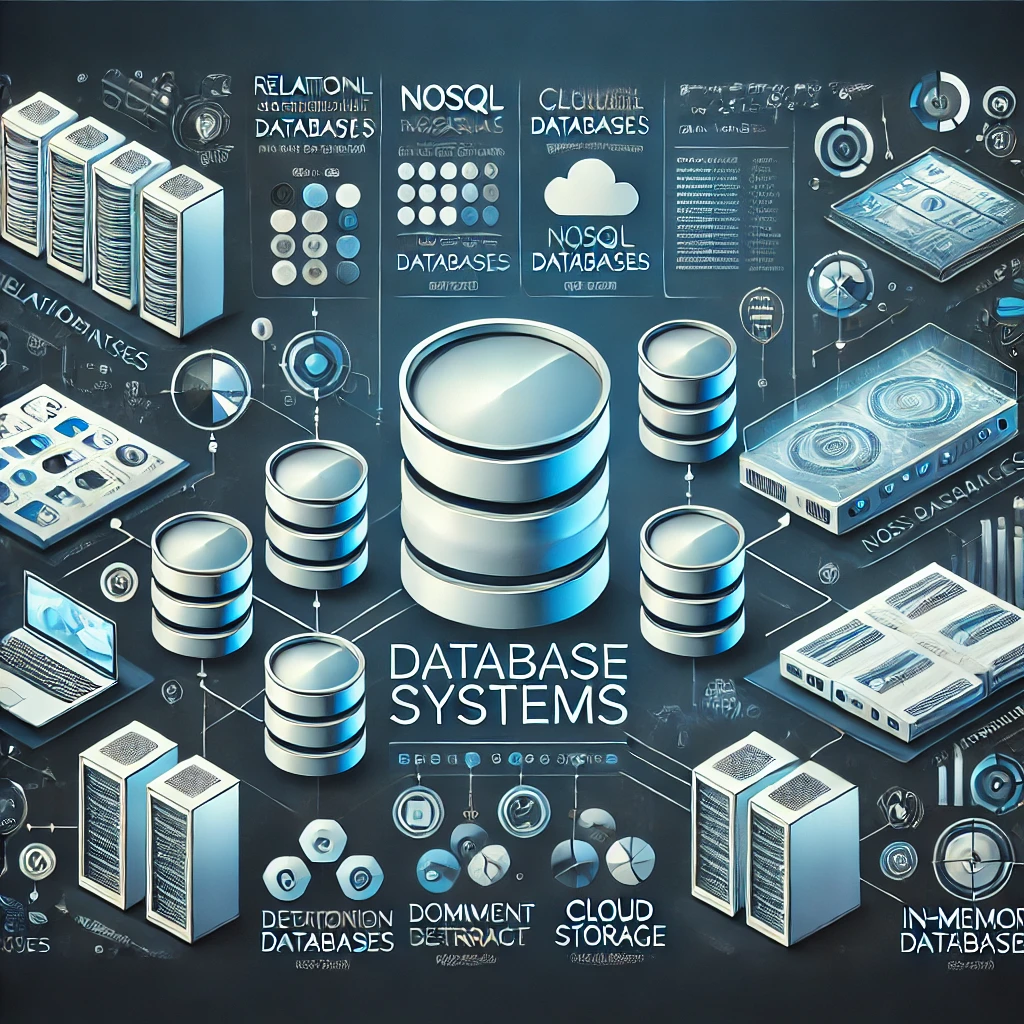
a. Relational Databases (RDBMS) Store data in tables (rows and columns). Use Structured Query Language (SQL) for managing data. Examples: MySQL, PostgreSQL, Microsoft SQL Server, Oracle Database. b. NoSQL Databases Designed for unstructured or semi-structured data. Suitable for large-scale data and real-time applications. Types: Document-Based: MongoDB, CouchDB Key-Value: Redis, DynamoDB Column-Based: Cassandra, HBase Graph-Based: Neo4j c. Cloud Databases Hosted on cloud platforms. Provide scalability and flexibility. Examples: Amazon RDS, Google Cloud SQL, Microsoft Azure SQL. d. In-Memory Databases Store data directly in RAM for ultra-fast performance. Examples: Redis, Memcached.